Why Tradies Are Losing Money - Money Lost Every Time The Phone Rings & Goes Unanswered

Nic Fouhy
4 February 2026
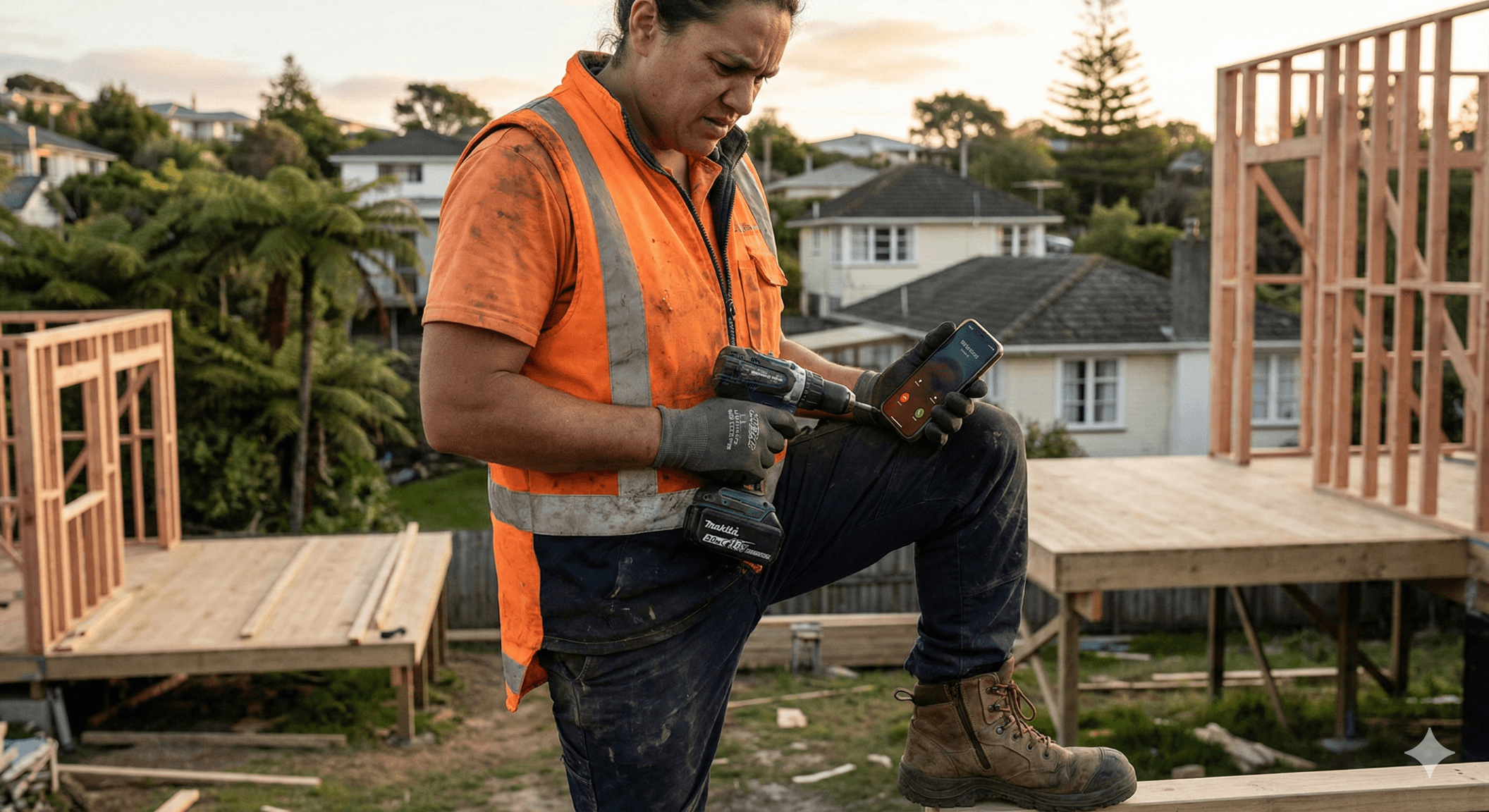
You're halfway through rewiring a switchboard in a ceiling cavity. Your hands are full, you're covered in dust, and your phone starts buzzing in your pocket.
You already know what happens next. You let it ring. The caller doesn't leave a voicemail. They Google the next sparky on the list. By the time you climb down and check your phone, that $800 job has already gone to someone else.
Sound familiar? You're not alone and the numbers behind this problem are far worse than most business owners realise.
The silent revenue leak no one talks about
Here's a stat that should make every trade business owner uncomfortable: 62% of small businesses in New Zealand don't answer their phone during business hours. Not after hours. Not on weekends. During the working day.
It makes sense when you think about it. Builders are on rooftops. Plumbers are under houses. Painters are up ladders. Electricians are in ceiling cavities. The phone rings, and you physically cannot answer it. That's not laziness that's the reality of doing the job.
But here's where it gets expensive. Research shows that 85% of people who call a business and don't get an answer won't call back. Three-quarters of them will simply ring a competitor instead. They're not loyal to you they're loyal to whoever picks up first.
When you run the numbers across a year, the average small trade business is leaving roughly $126,000 on the table from missed calls alone. That's not a rounding error. For most one- or two-person operations, that's the difference between a good year and a great one.
The impossible choice tradies face every day
Every Kiwi tradie knows this dilemma. You're on the tools, the phone goes, and you've got two options both of them bad.
Option one: stop what you're doing and answer. You lose momentum. You lose productivity. If you're mid-task on something that requires focus which is most of the time you're introducing risk. Nobody wants their electrician checking voicemail while they're elbow-deep in a live switchboard.
Option two: let it ring. The job you're currently on stays on track, but the next job just walked out the door.
Most tradies have tried the obvious workarounds. Voicemail is the go-to, but customers genuinely dislike it studies suggest around 80% of callers hang up the moment they hear a recorded message. Hiring a receptionist solves the problem beautifully, but at $4,000-plus a month it's out of reach for most small operators. And asking your partner to field calls? That's a recipe for resentment, not growth.
The result is that most trade businesses just accept the loss. They treat missed calls as an invisible cost of doing business, because until now there hasn't been a practical alternative.
What a missed call actually costs you
It's easy to shrug off a single missed call. But let's break down what's really happening.
The average tradie in New Zealand misses around 23 calls per week. Not all of those are potential jobs some are suppliers, existing clients, even the odd telemarketer. But a meaningful portion are new enquiries, and each one represents somewhere between $300 and $500 in potential revenue.
Even if only a third of those missed calls were genuine leads, that's roughly seven or eight lost opportunities every single week. Over a month, that's 30-plus potential jobs you never even had a chance to quote on. Over a year, the compound effect is staggering.
And the cost isn't just financial. Every missed call is a missed chance to build your reputation. When someone rings and gets nothing no answer, no callback, no acknowledgement they form an impression of your business. It's not a good one. In an industry that runs on word-of-mouth and repeat customers, that invisible damage adds up quietly.
Why this problem is getting worse, not better
A decade ago, if someone needed a plumber, they'd flip through the Yellow Pages and maybe try two or three numbers. Today, they Google "plumber near me," and they've got ten options in front of them in seconds. If you don't answer, the next business is literally one tap away.
Customer expectations have shifted too. People are used to instant responses. They order takeaways from an app and track the driver in real time. They message a retailer and expect a reply within minutes. When they call a business and get silence, it feels outdated even if the reason is perfectly valid.
For tradies, this creates a competitive disadvantage that has nothing to do with the quality of your work. You could be the best sparky in Wellington, but if the average operator down the road answers their phone and you don't, they're getting the job.
There is a better way
This is exactly the problem we built CallCover to solve.
CallCover gives your business an AI-powered phone assistant that answers every call, 24 hours a day, 7 days a week. It picks up in a natural Kiwi voice, greets callers using your business name, answers their common questions, and takes detailed messages when needed. You get an instant SMS summary after every call, so you know exactly who rang and what they needed without ever having to stop what you're doing.
It's not a voicemail box. It's not a generic call centre reading from a script. It's an intelligent assistant that actually knows your business: your services, your service areas, your hours, your pricing. Callers get a real conversation, and you get every lead captured.
Setup takes about 5 minutes. You don't need to change your existing phone number just set up call forwarding from your current number to your new CallCover line, and you're live.
And at $99 a month, it pays for itself the first time it catches a single job that would have otherwise gone to a competitor. When you consider that the average trade job is worth $300 to $500, the maths is hard to argue with.
The question isn't whether you can afford it
When we talk to tradies about CallCover, the conversation almost always starts the same way: "Yeah, I know I miss calls, but it's just part of the job."
It doesn't have to be. The technology exists today to make sure every single person who calls your business gets a professional, helpful response whether you're on a roof, under a house, at smoko, or sound asleep at 2am.
The real question isn't whether you can afford $99 a month for an AI assistant. It's whether you can afford to keep letting thousands of dollars a year slip through your fingers.
Every call could be your next big job. Make sure someone's there to answer it.
If you're ready to stop losing revenue to missed calls, you can get started with CallCover in about the time it takes to have a coffee. Head to callcover.co.nz and see for yourself.